- +90 (384) 353 50 01
- Yeni Mahalle, Cumhuriyet Meydanı, No: 03 Mustafapaşa / Ürgüp / Nevşehir
- info@mustafapasa.bel.tr
 TR
TR
 EN
EN
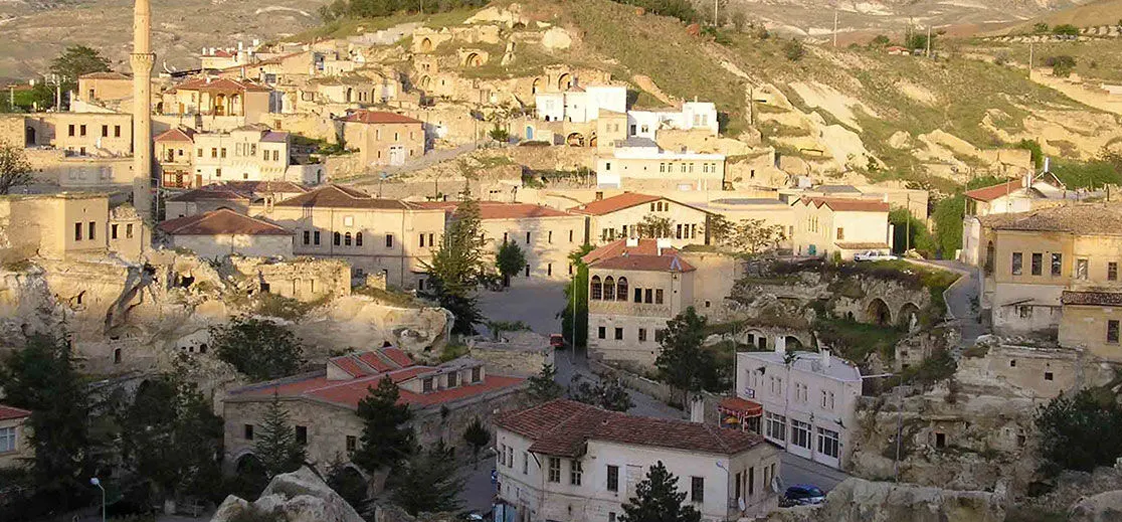
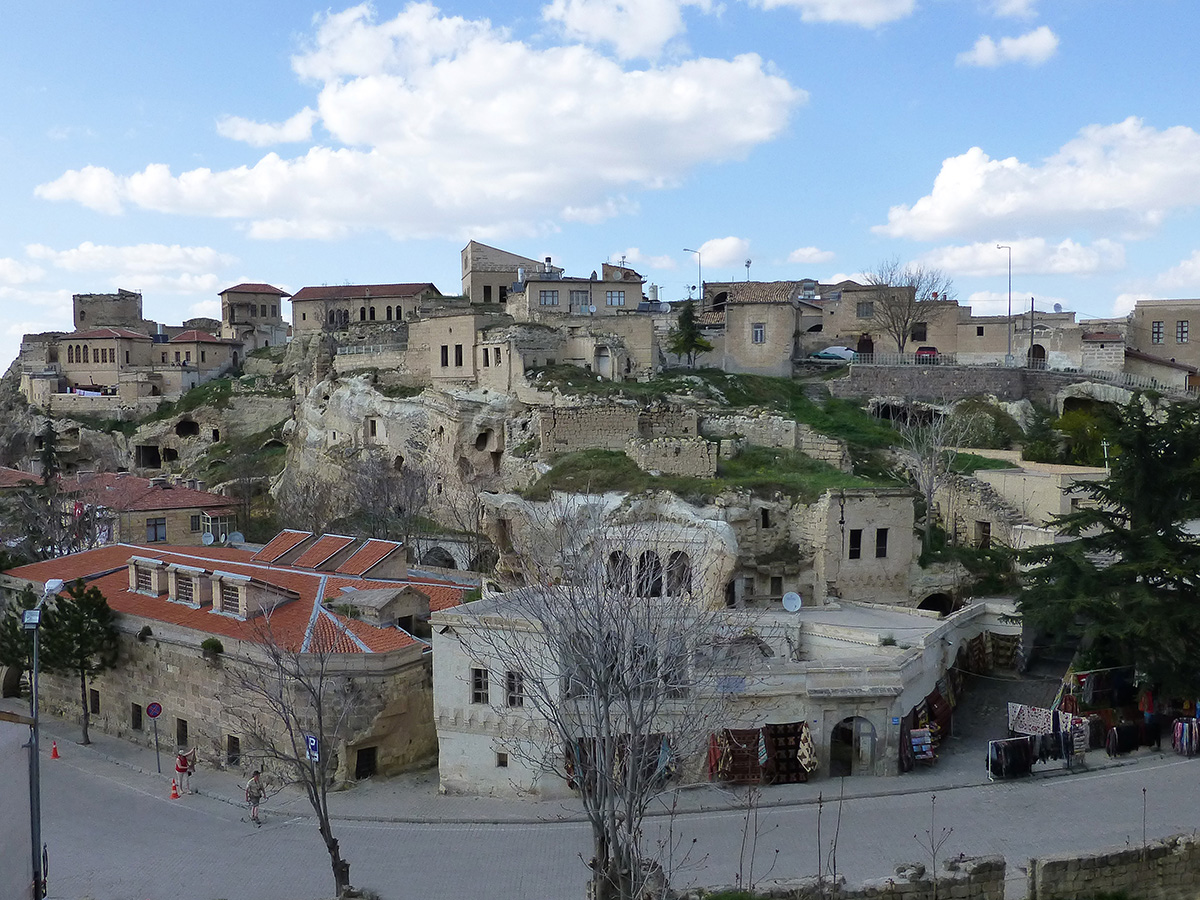
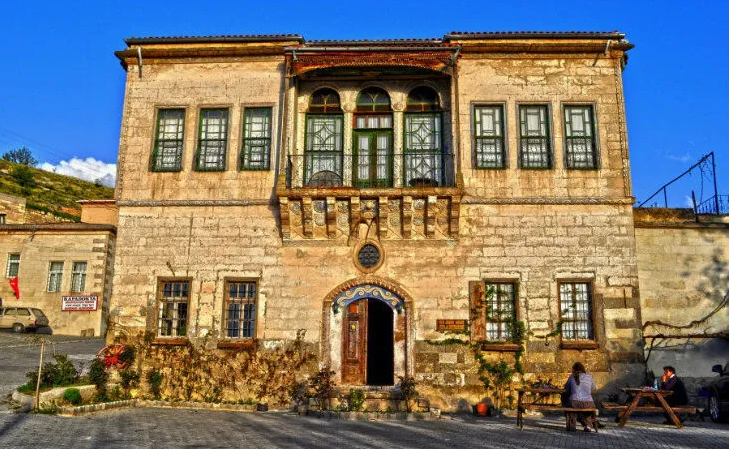
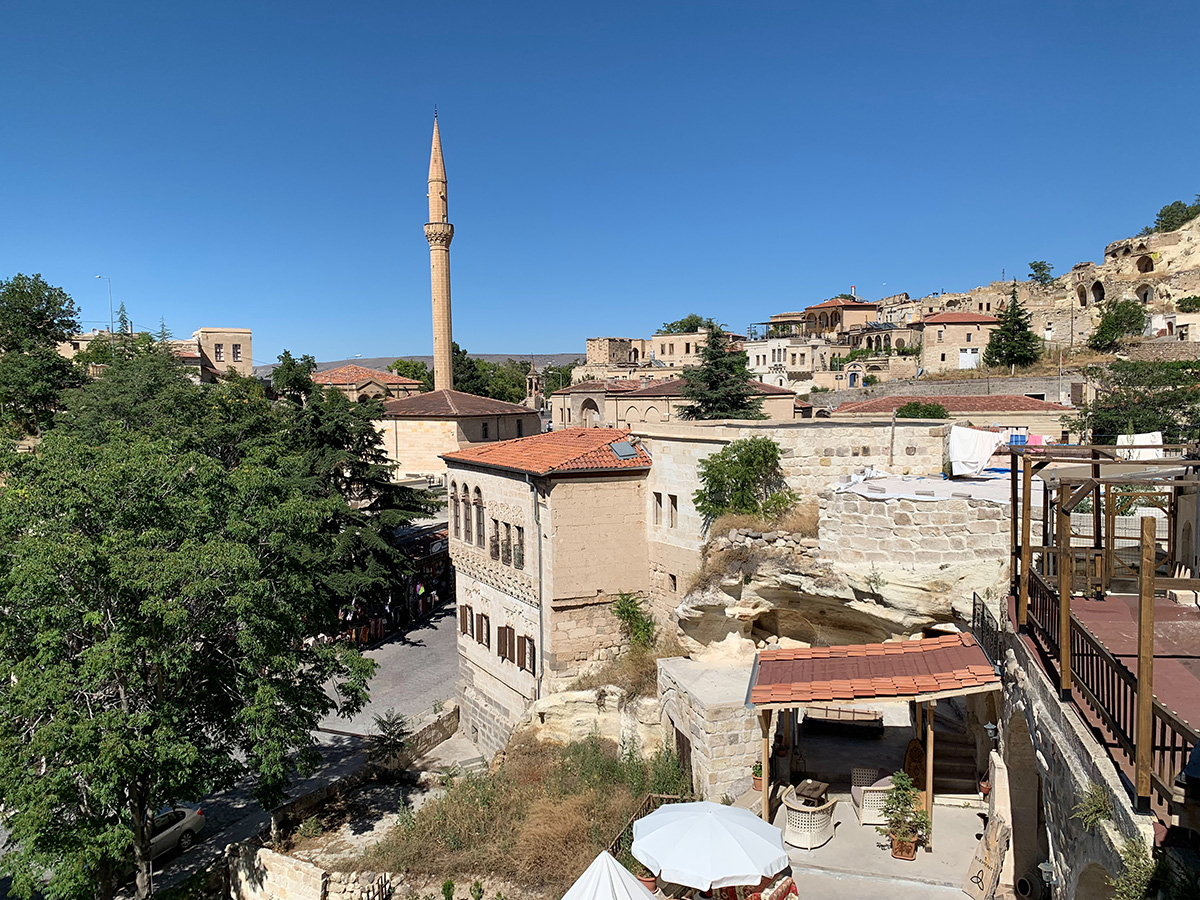
Fairy chimneys, underground cities, Ortahisar Castle… We know that many natural and historical beauties come to mind the moment you think of Nevşehir. But have you ever heard of the village of Mustafapaşa, formerly known as Sinasos? Located 23 km from Nevşehir and 5 km from Ürgüp, Mustafapaşa is known today as a tourism village—formerly “Sinasos.” Until the 1920s, Sinasos, now called Mustafapaşa, was a Cappadocian town with a population of around three thousand, the majority of whom were Greek Orthodox residents. Situated about five kilometers south of Ürgüp, the town is remembered today for its unique architecture and its educated, skilled inhabitants. Before 1925, Mustafapaşa’s local population consisted of people who migrated from surrounding villages, and until the 1924 population exchange, the town was home to Greek Orthodox residents and had nearly 700 stone mansions. The town’s inhabitants at that time were wealthy Greek merchants engaged in the trade of wine and medicinal products. With the population exchange, the Greek residents were relocated to Greece, and Turkish families were settled in their place. According to regional accounts, the Sinasos architects who transformed stone craftsmanship into artistic architecture came from Mardin and the Syrian border.
Although the town’s history dates back to very ancient times, precise and definitive information is limited. However, according to several sources, Sinasos had a simple town council. Administratively, it was affiliated with the Ürgüp District Governorship and the Konya Governorship. In terms of ecclesiastical authority, it was connected to the Kayseri Metropolis, the old capital of Cappadocia. The town’s population consisted of Turks and Greeks. Due to centuries of coexistence and many shared customs, Turks and Greeks developed strong bonds of friendship. Most importantly, their shared cultural characteristics united the two communities. Some sources suggest that during the 1800s, Sinasos was a major cultural, commercial, and trading hub in the Cappadocia region. Traders and sellers from surrounding districts and villages would not leave until they sold their goods in the local bazaar; if a merchant could not sell their products, the wealthy Greek residents of the town would buy them to ensure commercial satisfaction.
During this same period, Sinasos is also known to have been an educational center. The town housed a boys’ school, a religious college used for training young Greek men, a girls’ school, and a library. At the school, Greek students were taught Ancient and Modern Greek, while Turkish students learned Turkish. In the 1870s, girls’ education also became a concern for the community. Until then, a priest assigned by the town council attempted to teach girls basic reading and writing, albeit with limited knowledge. Over time, these lessons were deemed insufficient, leading the town’s residents to establish a girls’ school to provide better education. Half of Sinasos’ livelihood came from agriculture, while the other half came from the income of those working outside the town. According to statistics from the population exchange commission, before the 1923 exchange, the Greek population, which was 4,500 in 1890, fell to 3,000 and then to 878 by 1924. Meanwhile, the Turkish population increased from 600 in 1890 to 1,000 in 1925. These demographic changes were the result of the 1923 population exchange. With the exchange, Greeks living outside Istanbul and Turks living in Greece outside Western Thrace were resettled. The Turkish families who arrived in Sinasos during the exchange previously lived in the villages of Jerveni and Kastoria (Kesriye) near Thessaloniki. They traveled by sea to İzmir and Mersin, and then by land to Sinasos. The Greek residents leaving Sinasos traveled by land to Mersin and then continued to Greece. Their initial settlement locations after arriving in Greece are unknown, but later they founded a new settlement named Nea Sinasos (New Sinasos). The name Sinasos was replaced in the 1920s when the village elders and local residents decided to honor Mustafa Pasha, who brought water to the village and built fountains. This name became official in 1966 with the establishment of the municipality. The name Mustafapaşa was embraced by the locals, while Sinasos continued to be recognized as the village’s historical name due to its touristic significance.
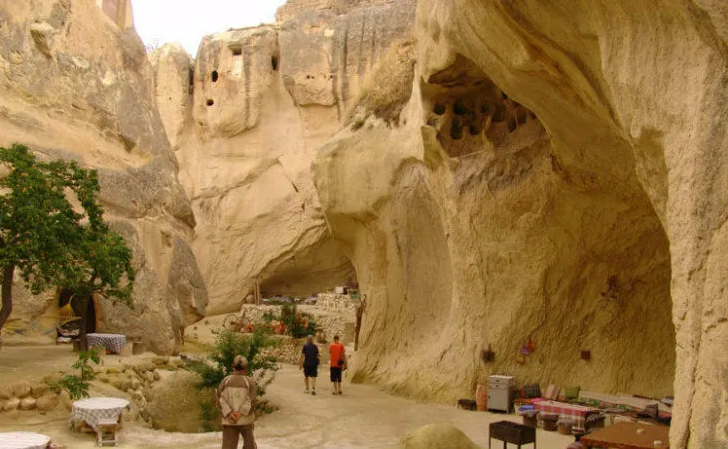
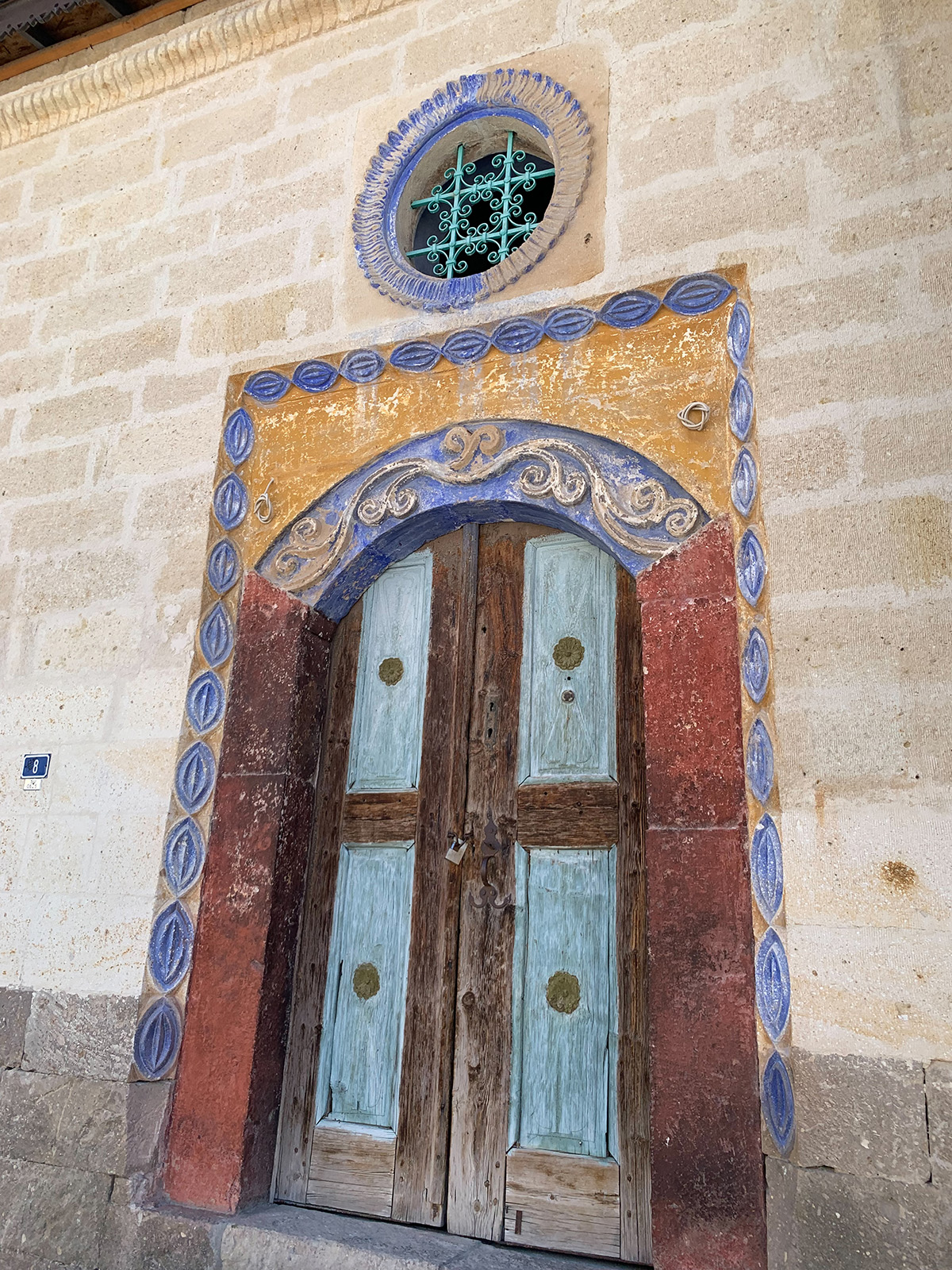
Viticulture, wine production, livestock farming, and stone craftsmanship have been the town’s primary economic activities from past to present. Trade was the main economic activity of the Greek residents. The fact that Sinasos was once a large and prosperous settlement is evident from the existence of a large hotel for travelers, two pharmacies, a doctor, a bathhouse, and large bridges. Today, the town is protected by the Ministry of Culture and Tourism, and it officially opened to tourism in 1981. Mustafapaşa, with its centuries-old history, features 93 historic houses and nearly 30 churches and chapels, offering a visual feast of history. Recognized as one of the world’s best tourism villages by the United Nations World Tourism Organization, Mustafapaşa continues to fascinate visitors to Ürgüp with its cultural richness, magnificent stone architecture, and natural beauty.
Where does the name Mustafapaşa come from?
According to the manuscript of Serafim Rizos, the leader of the Caviar Makers Guild, Mustafapaşa takes its name from a high-ranking state official named Seyyid Mustafa Pasha. It is understood that when he resolved the village’s significant water shortage by commissioning the construction of fountains, the villagers began referring to the area as Mustafapaşa. According to Rizos’ manuscript, Mustafa Pasha visited the village and was warmly welcomed by the residents. Upon his departure, he asked the villagers what they desired, and they expressed their need for water. The fountains he later commissioned greatly alleviated the water problem. There are two inscriptions in the village that mention the pasha’s name. Both fountains were built in 1804, and the pasha’s name is written on the original marble inscriptions. Although little is known about Mustafa Pasha, one study identifies him as a vizier and deputy grand vizier who died in 1803 (Hijri 1228). The same study states that he served as a nişancı (chief secretary) in the Ottoman palace. Although there were other historical figures with the same name, their dates of death do not align with the construction dates of the fountains. Taking into account the inscription dates (1804–1805) on the fountains in Mustafapaşa, it is believed that the aforementioned pasha was indeed the Mustafa Pasha who gave his name to the village.
As Mustafapaşa Municipality, we work to provide the best service to our people.